How to Plan a Shop Tool Storage Layout for a Railroad Maintenance Shop
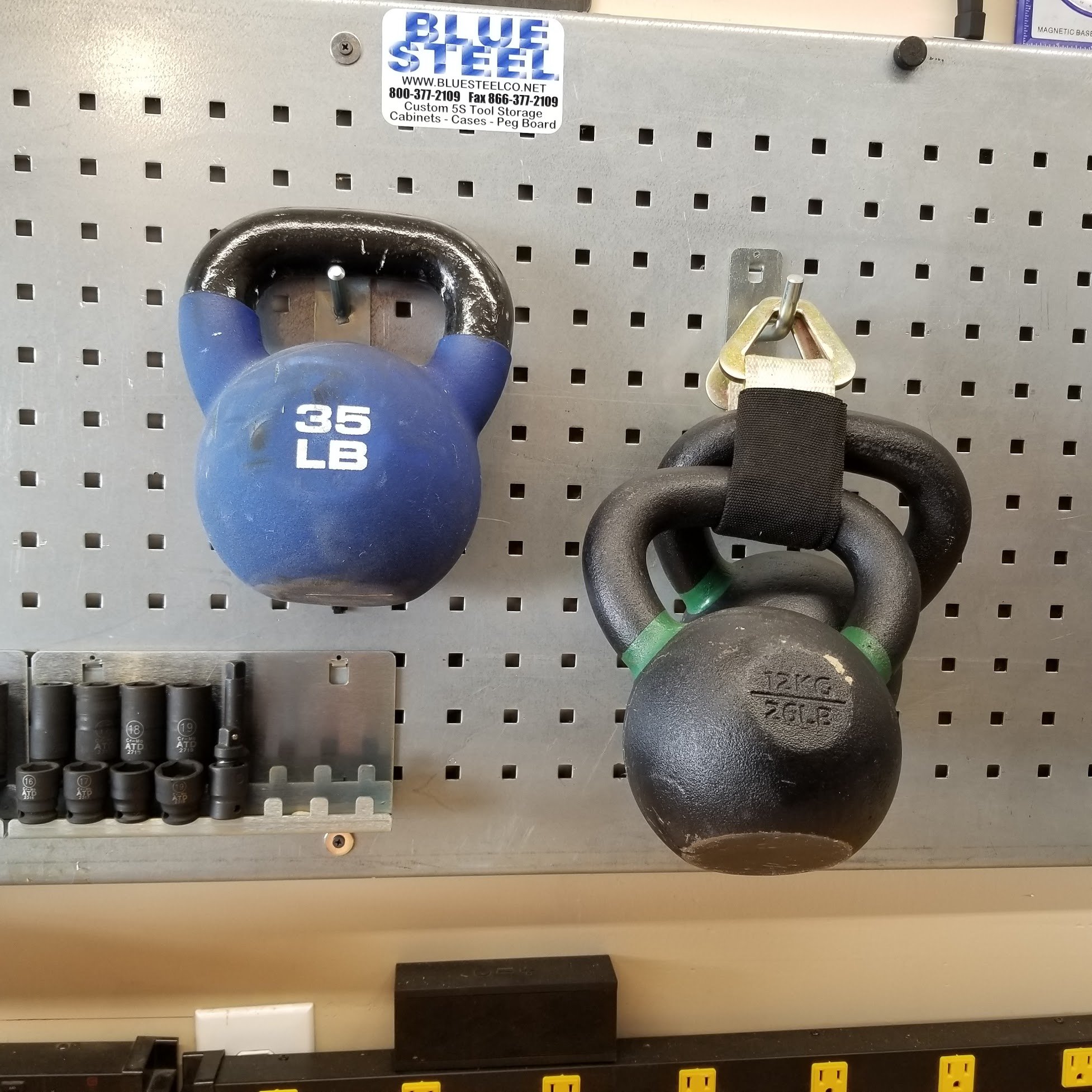
A good shop tool storage layout starts with an audit of what each crew actually uses, then matches the storage type to how often each tool is needed. Keep daily tools on carts or caddies at the work, weekly tools in nearby cabinets, and rarely used tools on wall storage farther away.
Key Points
- Audit first. List every tool a crew uses on a typical job before choosing any storage.
- Sort tools by frequency of use. Frequency decides whether a tool rides on a cart, sits in a cabinet, or hangs on a wall.
- Measure the walk from the work position to the tools. Place storage to shorten the longest and most frequent trips.
- Keep aisles and work areas clear. OSHA’s walking-working surfaces rule treats orderly passageways and storerooms as an employer duty where it applies.
Step 1: Audit the Tools a Crew Uses
Start at the work, not at the storage room. Follow one crew through a typical job, such as a locomotive service, a truck change-out, or a pit inspection, and write down each tool they pick up.
Record three things for each tool: how many times per shift it is used, where it is used, and who uses it. A spreadsheet or a clipboard is enough. Do this for two or three representative jobs, not one.
Note the tools that get carried back and forth. Those trips are the ones a better layout removes.
Step 2: Sort by Frequency of Use
Sort the list into three groups.
- Every job or every shift. These tools should be within a step or two of the work position.
- A few times per week. These can sit in a fixed cabinet within a short walk.
- Occasional or specialty. These can live on wall storage or in a back cabinet, as long as they are easy to find and return.
Count the tools in each group and note their size and weight. That count is your sizing input. Add room for growth, since tool lists rarely shrink.
Step 3: Choose Between Carts, Cabinets, and Wall Storage
Each storage type fits a different group.
Carts and caddies for the daily group. A cart moves the tools to the work instead of sending the mechanic to the tools. A tool caddy or a small hanging tool caddy keeps a set together for one task. Service carts carry larger tools and parts, and a steel service cart suits heavier loads. Size a cart to the tools in the daily group, not to the whole inventory.
Cabinets for the weekly group. 5S tool cabinets hold tools in marked positions, which makes a missing tool obvious. They also keep tools out of the weather and off the floor. Place them where several work areas can reach them.
Wall storage for the occasional group. Pegboard socket holders and similar wall-mounted storage use vertical space and keep floor area open. They suit tools that are used less often but must be easy to see.
For a broader view of marking and organizing tool positions, see 5S tool storage organization. This post covers the sizing and placement decisions that come before it.
Step 4: Position Storage Near the Work
Walk each job with a tape measure or a pacing count. Mark where the mechanic stands, where the tools are now, and the distance between them. The longest, most frequent trips come first.
Some placement rules hold up in most shops:
- Put the cart or cabinet at the side of the work position that does not block the path in or out.
- Keep storage out of the line of travel for forklifts, carts, and people.
- Place shared cabinets between two work areas rather than at the far end of a bay.
- Keep heavy tools between knee and shoulder height.
Re-measure after the change. If a crew still makes the same long trips, the tool belongs in a faster group or on a cart.
Keep Aisles Clear and Floors Rated
Storage that clutters a walkway creates its own hazard. Under 29 CFR 1910.22(a)(1), as published on eCFR, “All places of employment, passageways, storerooms, service rooms, and walking-working surfaces are kept in a clean, orderly, and sanitary condition.” Paragraph (a)(3) requires walking-working surfaces to be “maintained free of hazards such as sharp or protruding objects, loose boards, corrosion, leaks, spills, snow, and ice.”
Paragraph (b) adds that “the employer must ensure that each walking-working surface can support the maximum intended load for that surface.” When you plan a loaded cabinet or a heavy cart, confirm the floor or platform under it can carry the load.
Whether this rule or another one governs a specific railroad shop area depends on the employer and the area. Ask your safety department which rules apply, and follow your railroad’s own rules on top of them.
Step 5: Review With the Crew
Show the proposed layout to the people who work in it. Mechanics know which tool is always missing and which cabinet is always in the way.
Put the changes in place for a few weeks, then audit again. Adjust the cart contents, move a cabinet, or relocate a wall rack. A layout is a working plan, and it improves with a second pass.
Rolling and Fixed Storage From Blue SteelCo
Blue SteelCo has fabricated steel and aluminum shop equipment in Waxahachie, Texas since 1997, Made in USA. Rolling options include tool caddies, service carts, and hand trucks and shop carts. Fixed options include 5S tool cabinets and pegboard storage.
Send your tool list, the work location, and whether the storage should roll or stay put. Use the contact page or call 800-377-2109 for a quote. See the full Tools category to browse the range.
Frequently Asked Questions
How do I decide what goes on a cart and what goes in a cabinet?
Base it on how often the tool is used. Tools a crew reaches for every job belong on a cart or caddy that moves to the work, and tools used less often can stay in a fixed cabinet nearby.
Where should tool storage go in a railroad maintenance shop?
Put it as close as practical to where the tools are used, such as the pit, the bay, or the work stand, without blocking walkways. Measure the walk from the work position to the tools and shorten the longest trips first.
Does OSHA say anything about tool storage and walkways?
29 CFR 1910.22(a)(1) requires passageways, storerooms, service rooms, and walking-working surfaces to be kept in a clean, orderly, and sanitary condition. Section 1910.22(a)(3) requires walking-working surfaces to be free of hazards such as sharp or protruding objects.
What storage does Blue SteelCo sell for a railroad shop?
Blue SteelCo is a steel and aluminum fabricator located in Waxahachie, Texas, with a standard line of 5S tool cabinets, pegboard, service carts and tool caddies. Call 800-377-2109 or use the contact page for a quote.