Point of Use Tool Storage vs. Tool Crib in a Locomotive Repair Shop
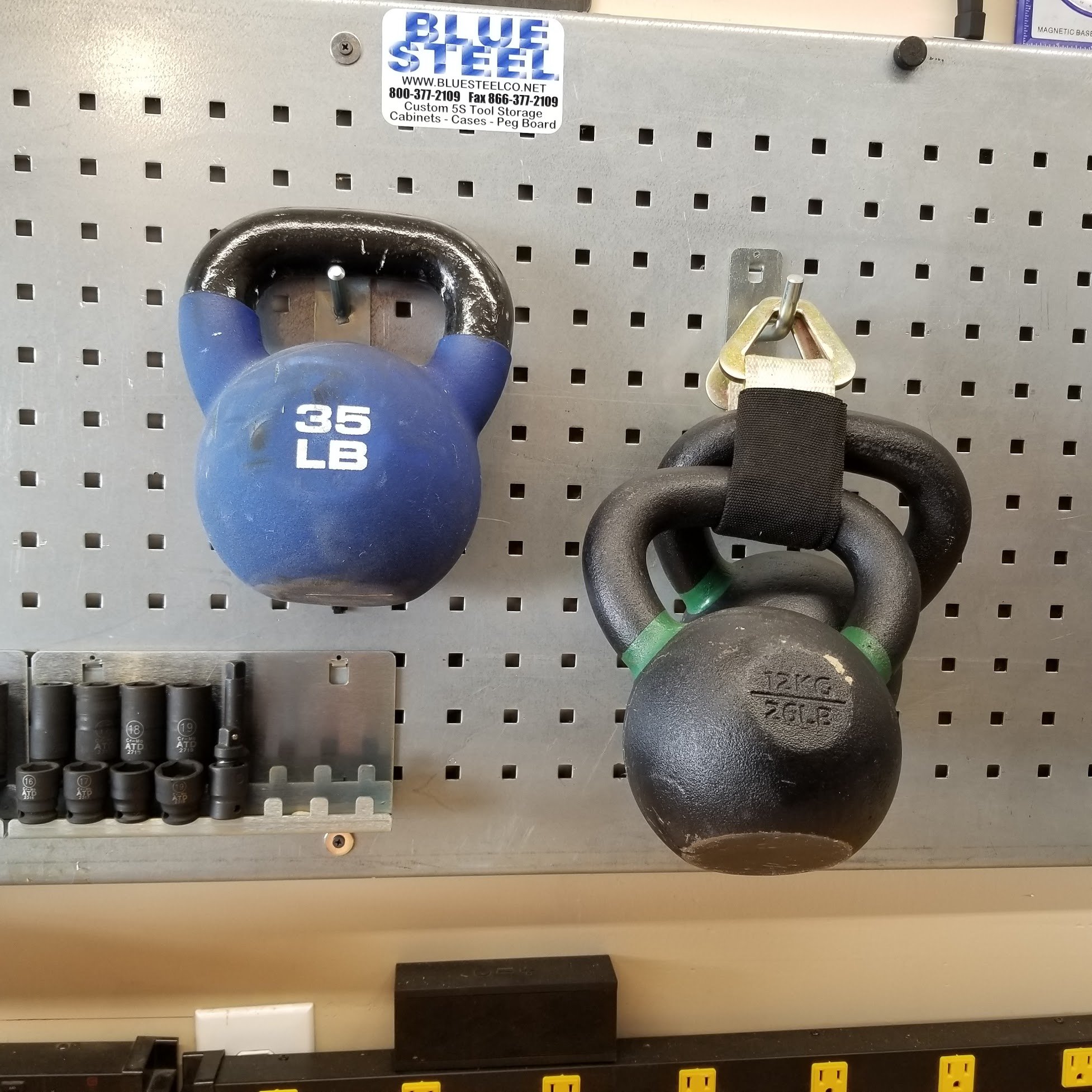
Point of use tool storage puts the tools a mechanic needs at the work location, on a cart, caddy or wall panel. A central tool crib keeps them in one place and issues them on request. A hybrid often fits: the crib holds rarely used and precision tools, and carts hold the daily set.
Key Points
- OSHA does not require a tool crib or any specific storage method. It does make the employer responsible for the safe condition of tools.
- A crib centralizes control. Point of use storage shortens the trip to the tool.
- Carts and caddies must stay out of aisles and walkways when not in use.
- Accountability depends on a named owner and a defined layout, not on the storage method.
What each approach means in a locomotive shop
A tool crib is a staffed or controlled room. Mechanics request a tool, use it, and return it. One place holds the inventory, so one place is checked.
Point of use storage moves the tools to the job. In a locomotive shop that means a tool caddy at the truck, a service cart beside the engine, or a pegboard socket holder at a bench. The mechanic does not leave the work to get a socket.
Locomotive work spreads across long distances: pits, trucks, long tracks, and engine bays. That distance is the main reason shop leads consider moving tools out of a central room.
Walk time and tool loss
Walk time is easy to see. Every trip to the crib is time away from the unit. The farther the crib is from the track, the more each trip costs. Queueing at the crib window adds to it when several crews need tools at once.
Tool loss is harder to read. Hoarding is a common driver in other industries: when tools are slow to get, operators stash them near their stations. That makes the crib count look worse than the real inventory and makes tools hard to find.
We do not have measured walk-time or tool-loss figures for locomotive shops, and you should be wary of any vendor number that does not come with its data. Measure your own shop. Time a week of crib trips for one crew. Count missing tools at the end of a month. Those two numbers are more useful than any general claim.
Accountability: who owns each tool
Accountability is where a crib looks strongest. Every tool goes out against a name and comes back against a name.
Point of use storage can do the same, but you have to set it up on purpose:
- Assign one owner to each cart or caddy.
- Define the layout so a missing tool is obvious. Shadow boards and outlined drawer layouts do this. See 5S tool storage organization for the approach.
- Check contents at shift end and note what is missing.
Without these steps, a cart is just a place where tools disappear more slowly.
What the regulations say
OSHA’s rule on tools is short. 29 CFR 1910.242(a) says each employer “shall be responsible for the safe condition of tools and equipment used by employees,” including tools and equipment furnished by employees. It sets no rule on crib versus cart. Whichever you choose, someone has to inspect and remove damaged tools.
Housekeeping rules apply to both models. 29 CFR 1910.22(a) requires places of employment, passageways, storerooms, service rooms and walking-working surfaces to be kept in a clean, orderly and sanitary condition. It also requires walking-working surfaces to be maintained free of hazards such as sharp or protruding objects.
29 CFR 1910.176(a) addresses aisles: they “shall be kept clear and in good repair, with no obstruction across or in aisles that could create a hazard.” Section 1910.176(c) says storage areas must be kept free of accumulations of materials that create tripping, fire, explosion or pest harborage hazards. Whether a given cart counts as stored “material” is not settled by that text, but the aisle language is a clear reason to give every cart a marked parking spot.
One caution for railroad shops. Federal Railroad Administration authority can displace OSHA on some hazards. The Occupational Safety and Health Review Commission decided that for open repair pits in Consolidated Rail Corporation, Docket No. 80-3495 (1982). We found nothing that says whether tool storage is covered the same way, so check with your safety department.
How to decide: a practical method
Sort your tools into three groups.
- Daily tools. Wrenches, sockets, and hand tools used on most jobs. Put these at the point of use on a tool caddy or a steel service cart.
- Job-specific tools. Tools used for one type of repair. A dedicated cart, such as a vise cart, keeps the set together and moves it to the work.
- Rare, precision or high-value tools. Keep these in the crib, with check-out records.
Then test the split. If a crew still walks to the crib many times a shift, move that tool group to a cart. If tools keep going missing from carts, tighten ownership and layout before buying more storage.
Which Blue SteelCo equipment supports each approach
For a crib-based shop, the equipment that helps is the kind that moves tools out and back. A service cart can carry a job’s tools from the crib to the unit and return them together.
For point of use storage, a small hanging tool caddy and 5S tool cabinets keep tools at the work area with defined positions.
Blue SteelCo builds steel and aluminum shop equipment in Waxahachie, Texas. It is Made in USA and has been since 1997.
Next step
Start with the Tool Caddy page, or browse Service Carts. To spec a cart or caddy for your crews, use Contact or call 800-377-2109. Tell us the tools, the work location and the aisle width, and we will quote it.
Frequently Asked Questions
Does OSHA require a tool crib in a locomotive repair shop?
No. 29 CFR 1910.242(a) makes the employer responsible for the safe condition of tools and equipment used by employees, but it does not require a crib or any particular storage method.
Can carts and caddies be an OSHA problem?
They can if they are left where they obstruct an aisle. 29 CFR 1910.176(a) says aisles and passageways must be kept clear and in good repair, with no obstruction across or in aisles that could create a hazard.
Is point of use tool storage better than a tool crib?
Neither wins in every case. Point of use storage cuts trips to a central location, while a crib suits rarely used, precision or high-value tools, so many shops combine the two.
Who is accountable for tools stored on a cart?
Whoever your shop assigns to it. Name one owner per cart or caddy, keep a defined layout, and check the contents at the end of each shift.