Shop Storage OSHA Compliance for Industrial Yards: What the Rules Say
Shop storage OSHA compliance comes down to two general standards: 29 CFR 1910.22 for walking-working surfaces and 1910.176 for handling and storing materials. Neither names tool storage. Both set rules for aisles, floors, loads and stored items that a tool layout must meet.
Key Points
- OSHA has no standard written for tool storage. 1910.22 and 1910.176 are the general rules that apply.
- 1910.176(c) requires storage areas to be free from accumulation of materials that constitute hazards from tripping, fire, explosion, or pest harborage.
- 1910.22(b) requires each walking-working surface to support the maximum intended load for that surface.
- 1910.22(d) requires regular inspection, and hazards must be corrected or guarded before employees use the surface again.
What shop storage OSHA compliance actually covers
OSHA does not publish a rule titled “tool storage.” The standards that matter are general. That is why shops get uneven advice about them.
Two sections do most of the work.
29 CFR 1910.22 covers walking-working surfaces. Under (a)(1), work areas, passageways, storerooms and service rooms must be kept “clean, orderly, and sanitary.” Under (a)(3), surfaces must be kept free of hazards such as sharp or protruding objects, loose boards, corrosion, leaks, spills, snow and ice.
29 CFR 1910.176 covers handling materials. Paragraph (a) says “aisles and passageways shall be kept clear and in good repair,” and permanent aisles must be marked. Paragraph (b) says stored material must not create a hazard. Paragraph (c) covers housekeeping in storage areas.
A tool left on the floor or a cart parked across an aisle can run against any of these. The standards do not list tools. They list conditions.
Keep aisles and passageways clear
1910.176(a) applies where mechanical handling equipment is used. It calls for sufficient safe clearances for aisles. In a yard or shop with forklifts, tow carts or service carts, the aisle is a defined path, and stored items stay out of it.
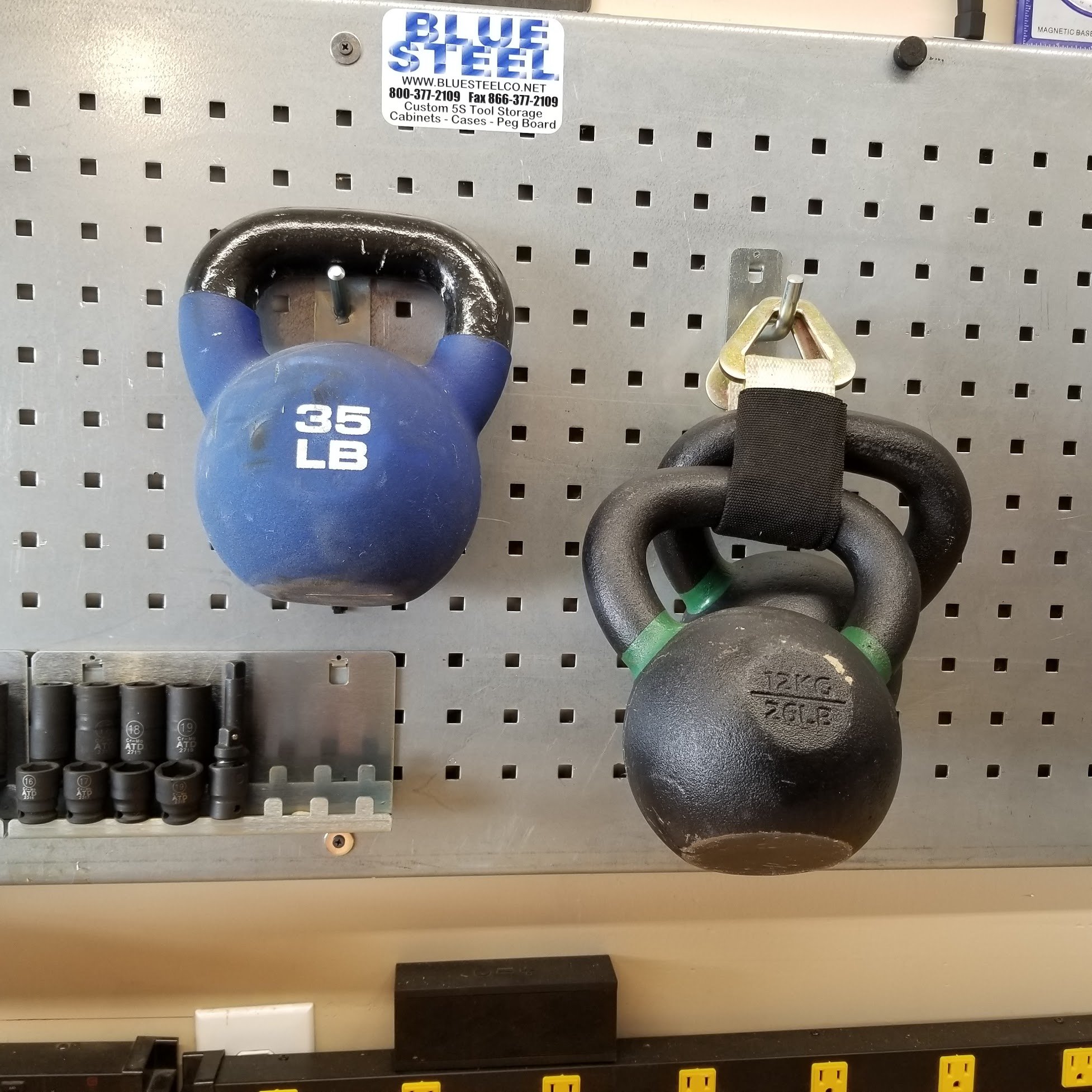
Fixed storage helps here. A cabinet, rack or caddy with a set home gives each tool a place off the walkway. Our 5S tool storage organization approach and 5S tool cabinets are built around that idea. Rolling storage works the same way when it has a marked parking spot. See our service carts and tool caddies.
Where lift trucks run near storage, a physical barrier keeps traffic and stored items apart. Our shop forklift barriers are one way to do that.
Prevent trip hazards in storage areas
1910.176(c) names tripping directly. Storage areas must be free from accumulation of materials that constitute hazards from tripping, fire, explosion, or pest harborage.
The word that matters is accumulation. One tool in use is work. A pile of hoses, bars and fittings by a wall is accumulation. Storage that is easy to use gets used. Storage that is hard to reach turns into a pile.
Practical points:
- Give every item that leaves a bench a defined return location.
- Keep storage off the walking line.
- Use closed or covered storage where items would otherwise be loose on the ground.
- Treat any pile that grows week to week as a signal that the storage is the wrong size or in the wrong place.
Stack stored material so it stays put
1910.176(b) says stored material must not create a hazard. Items stacked in tiers must be blocked, interlocked and limited in height so they are “stable and secure against sliding or collapse.”
For shop planning, treat shelves and tiered storage as subject to the same stability standard. A pallet storage table holds stock at a defined height off the floor. A fire extinguisher storage rack keeps extinguishers in a fixed position, not loose against a wall.
Match the structure to its load
1910.22(b) says each walking-working surface must support the maximum intended load for that surface. A platform, deck or floor that holds stored equipment is covered.
This is a spec question. Before you buy or build storage, know the heaviest thing it will carry. Tell the fabricator that number. A drawer cabinet for hand tools and a stand for a traction motor are different jobs.
When a repair involves the structural integrity of the surface, 1910.22(d)(3) requires a qualified person to perform or supervise it.
Inspect and correct hazards
1910.22(d)(1) requires walking-working surfaces to be inspected regularly and as necessary, and maintained in a safe condition. Under (d)(2), a hazardous condition is corrected or repaired before an employee uses the surface again. If that cannot happen right away, the hazard must be guarded to keep employees off it.
Make storage part of the walk-through. Look at floors, decks, shelves and anchors. Check for corrosion, which (a)(3) lists as a hazard. In a yard, also check for standing water, snow and ice, since (a)(3) names those too.
Material choice affects maintenance. We build in steel and aluminum. Steel is powder-coated. Which suits your yard depends on the load and the exposure, so describe both when you ask for a quote.
Rail yards: a different rule applies near tracks
1910.176(f) is specific to rail. Derail or bumper blocks must be provided on spur railroad tracks where a rolling car could strike cars being worked on, enter a building, or reach a work or traffic area. Paragraph (e) adds that clearance signs must warn of clearance limits.
We found no FRA rule on shop tool storage. Railroads often set their own rules for equipment near tracks, so check yours. Our blue flag safety equipment page covers protection for crews working on equipment.
Get storage specified for your shop
Blue SteelCo has made welded steel and aluminum shop equipment in the USA since 1997, in Waxahachie, Texas. Start with our 5S tool cabinets, or browse custom fabricated shop equipment.
For a quote, go to Contact or call 800-377-2109. Tell us what you store, how much it weighs, where it will sit and which vehicles pass nearby.
Frequently Asked Questions
Does OSHA have a standard written specifically for tool storage?
No. OSHA has no standard written for tool storage. The general rules in 29 CFR 1910.22 and 1910.176 apply to where and how tools are kept.
What does 1910.176(c) say about storage areas?
It requires storage areas to be free from accumulation of materials that constitute hazards from tripping, fire, explosion, or pest harborage.
Who has to inspect walking-working surfaces?
Under 1910.22(d)(1), the employer must ensure surfaces are inspected regularly and as necessary, and maintained in a safe condition.
Does 1910.22(b) apply to storage structures?
It applies to walking-working surfaces, which must support the maximum intended load for that surface. A platform, floor or deck that carries stored equipment falls under that requirement.
Does OSHA address rail spur tracks in yards?
Yes. 1910.176(f) calls for derail or bumper blocks on spur railroad tracks where a rolling car could strike cars being worked on, enter a building, or reach a work or traffic area.